
Home > Book Reviews > A Court Of Splintered Harmony

Review
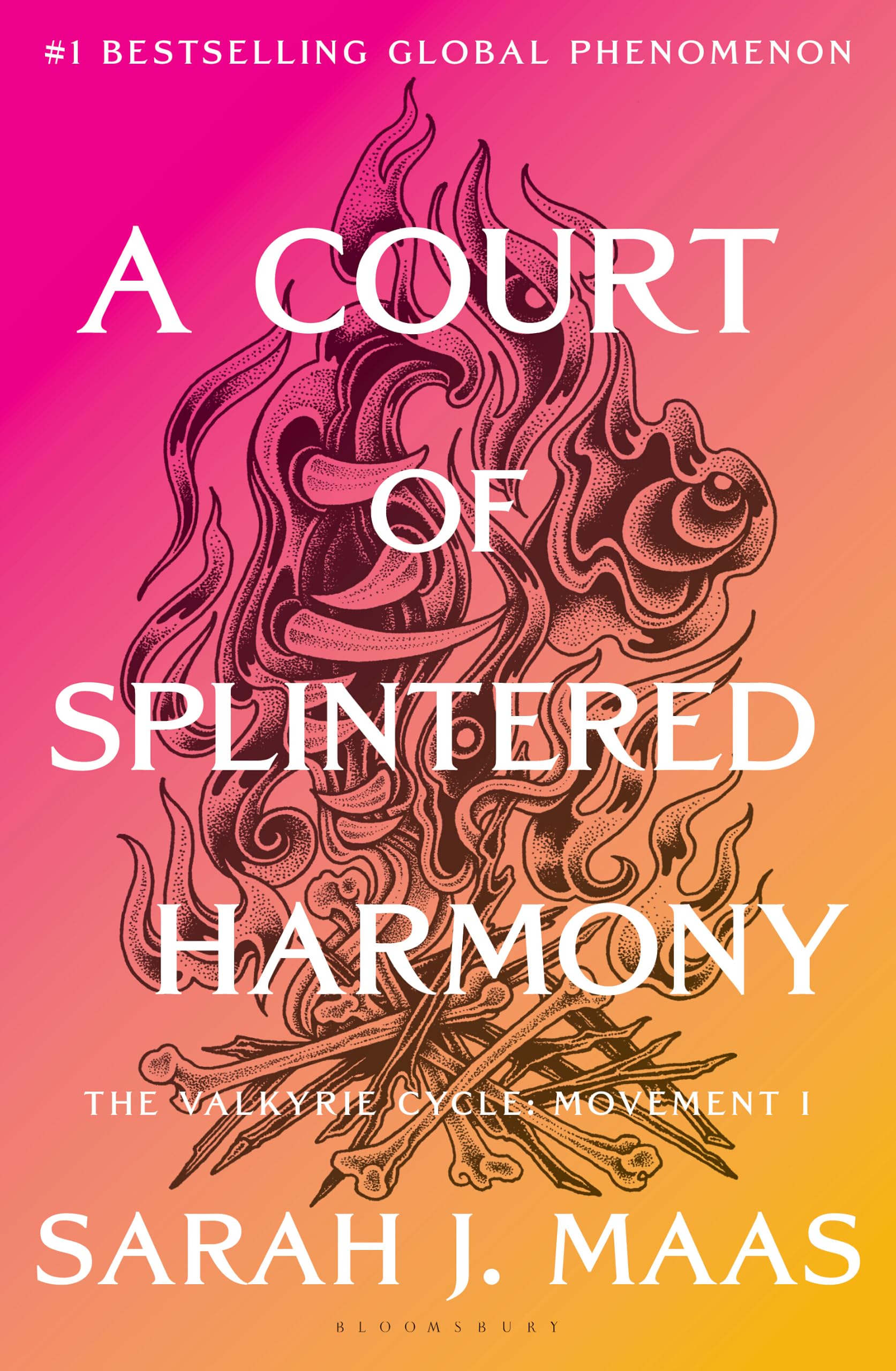
If you told me a few years ago that I would willingly devour thousands of pages of Fae politics, mortal trials, and heart-wrenching romance, I would have laughed. Yet, here we are. Sarah J. Maas has officially done it again, returning to the phenomenon that is the A Court of Thorns and Roses universe with A Court of Splintered Harmony: The Valkyrie Cycle, Movement I. As the sixth installment in a series that has defined modern fantasy romance for an entire generation, this book carries an immense weight of expectation. Fans have waited anxiously to see where Maas would take Prythian next, and this latest movement delivers a complex, character-driven narrative that manages to expand the borders of a world we thought we already knew inside and out.Let’s dive into the plot without spoiling a single drop of the drama. Set in the wake of the devastating Hybern War, Prythian is desperately trying to piece itself together. But peace, as it turns out, is fragile. Deep in the heart of the continent, the ancient and terrifying Koschei the Deathless is stirring. Bound to a mountain lake for millennia, his insidious threat is finally bleeding out across the Fae territories. Worse still, powerful external allies are surfacing, all hell-bent on reclaiming what they consider rightfully theirs: the human lands. The Night Court refuses to stand idly by while innocents face slaughter, but uniting fractured courts is proving nearly impossible. To make matters infinitely more complicated, the ruling circle is currently reeling from fresh betrayals and heavy truths. Old rifts are cracking wide open, threatening to tear them apart from the inside. To defeat Koschei’s creeping shadow, our favorite characters must find a way back to one another, mend ancient and modern fractures, and resurrect the alliances of the past. It’s a race against time to repair a very literal and figurative splintered harmony.
Maas’s writing style here remains instantly recognizable, though it feels sharper and more emotionally grounded than some of the sprawling mid-series entries. She has a rare gift for sensory world-building. You can practically smell the crisp mountain air of the Night Court, taste the metallic tang of magic in the air, and feel the suffocating weight of political tension in every dialogue-heavy scene. The pacing is a bit of a slow burn, particularly in the first third as Maas meticulously lays the chessboard for what promises to be a massive conflict. Some readers might find the initial setup leisurely, but trust the process. Once the narrative momentum kicks in, the pages practically turn themselves, building toward a crescendo that leaves you staring blankly at the wall, desperate for the next installment.
Character work has always been Maas’s superpower, and this book leans heavily into the internal friction of its ensemble. We aren't just dealing with external monsters; we are dealing with the messy, bruised realities of trauma, loyalty, and forgiveness. The characters feel older, wearier, and wiser, bearing the invisible scars of everything they have survived. The emotional stakes hit hard because Maas refuses to give her characters an easy emotional way out. Every reconciliation feels earned, and every lingering grudge feels justified.
Thematic depth is another standout element. The narrative grapples heavily with the cost of rebuilding—not just physical infrastructure, but trust. How do you govern a fractured society when the people who are supposed to protect each other are at odds? How do you forgive a betrayal when the fate of the world hangs in the balance? These questions elevate the book from a standard fantasy romance into something with genuine thematic weight.
That said, no book is entirely without flaws, and it is only fair to address the weaknesses. Maas is notorious for her sprawling exposition and penchant for repeating emotional beats to ensure the reader fully grasps a character's internal state. At times, the inner monologues become a bit repetitive, circling the same anxieties without moving the plot forward. Additionally, the sheer scale of the Maasverse—with its interconnected threads touching upon her other series—can occasionally make the narrative feel bloated. If you prefer tight, singular, self-contained plots, the expansive lore drops might occasionally test your patience.
On a personal note, I have a complicated relationship with this series. I fell deeply in love with the high-stakes emotional beats of the earlier books, felt slightly fatigued by the middle, and yet, I found myself completely hypnotized by this new chapter. There is an undeniable comfort in returning to these characters, even when they are making frustrating choices. It feels like catching up with old friends who refuse to make life easy for themselves—or for us.
If you are wondering whether to pick this up, the answer depends entirely on your history with the series. If you are a newcomer, do not start here; you will be hopelessly lost in a web of centuries-old Fae politics and deeply rooted emotional baggage. Go back to the beginning with A Court of Thorns and Roses. But if you are a returning fan of the ACOTAR universe, this book is an absolute must-read. It expands the lore, challenges the characters in fresh ways, and sets the stage for an unforgettable epic conclusion.
Ultimately, A Court of Splintered Harmony is a triumphant, emotionally resonant addition to the shelf. It balances the comfort of familiar faces with the thrilling terror of new threats, proving that Maas hasn't lost her touch.
Rating: 4.5 out of 5 stars.