
Home > Book Reviews > Is This A Plum?

Review
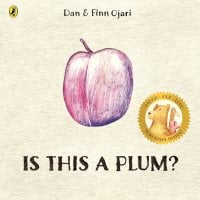
Picture books that win over both weary parents and hyperactive toddlers in a single sitting are far rarer than you might think. When you find one that brings genuine out-loud giggles to bedtime, you hold on to it tight. Is This a Plum?, created by father-and-son duo Dan and Finn Ojari, is precisely that kind of book. It takes a straightforward concept, infuses it with cheeky visual humour, and delivers a delightfully silly experience from cover to cover.At its core, the book relies on a brilliant interactive gimmick executed through clever die-cut holes. On every page spread, readers are prompted with an innocent-sounding question paired with a peek through a cut-out section. "Is this a plum?" you ask, pointing at a suspicious purple round shape. Turn the page, and the full illustration delivers the punchline: "NO – IT’S A BUM!"
The joke repeats with energetic rhythm across a variety of bizarre setups. A green squiggly line isn't a snake, but the frosting on a birthday cake. A grey curve isn't a goose, but the nose of a moose. The formula sounds simple on paper, but the execution relies heavily on perfect comic timing and clever visual trickery. Each page flip feels like a mini magic trick, turning expected everyday objects into absurd surprises.
What makes this work so well is the interplay between text and artwork. The illustrations are vibrant, textured, and full of personality without feeling overly busy. Dan and Finn Ojari use warm, inviting colour palettes that instantly grab a young child’s attention. The visual jokes don't just rely on the novelty of the die-cuts; the character expressions on every page add an extra layer of charm. The surprised, sheepish reactions of the creatures involved in these ridiculous mix-ups are hilarious in their own right.
The writing style is punchy, rhythmic, and built specifically for loud, expressive reading aloud. The rhyming scheme flows naturally, avoiding the clunky meter that often plagues early childhood titles. As a reader, you can build up anticipation before flipping each page, allowing toddlers to shout out their predictions—or their delighted corrections—at the top of their lungs. It turns quiet storytime into a fun, shared game between adult and child.
Beyond the sheer silliness, there is something quite clever going on underneath the surface. The book gently encourages early visual literacy. Children learn to look closely at shapes, colours, and context, testing their assumptions about what an image represents. It teaches kids not to trust their first impressions while building vocabulary through rhyme, rhythm, and structural repetition.
Having read this with a few different age groups, the response is consistently joyful. It works exceptionally well in nursery settings where a whole room of children can join in on the chorus of shouts. There is an infectious energy to the structure that makes children feel like they are in on the joke, anticipating the silly reveals before the page even turns.
If I had to point out a slight drawback, it comes down to physical durability and long-term reading mileage. Die-cut paper pages are inherently delicate. If you have a toddler who loves to grab, twist, and pull pages violently, those intricate cut-outs might suffer a bit of wear and tear over time. A heavy-duty board book version would be ideal for younger hands. Additionally, because the book relies heavily on the element of surprise, older children who have memorised every reveal might find the novelty wearing thin after dozens of reads, though the cheeky factor will likely keep them coming back anyway.
Despite that small caveat, the overall package is a riot. It captures the pure joy of childhood absurdity while respecting a child’s capacity for visual humour.
Who will enjoy this book?
- Toddlers and pre-schoolers (ages 2 to 5) who love silly jokes, surprises, and cheeky humour.
- Parents, carers, and teachers looking for an interactive read-aloud picture book that gets children actively participating.
- Fans of novelty books that use die-cuts and visual tricks in clever ways.
- Anyone shopping for a gift that is practically guaranteed to cause immediate laughter at storytime.
Is This a Plum? is a joyful, laugh-out-loud triumph of children's publishing. It transforms routine reading into a playful game that little ones will ask for night after night. Highly recommended for any family bookshelf.
Rating: 5 out of 5 stars.