
Home > Book Reviews > Land

Review
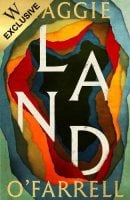
Maggie O’Farrell has an extraordinary talent for stepping into historic moments and pulling out intimate, deeply human stories from the margins of big national events. Having tackled Elizabethan grief so memorably in Hamnet, her novel Land turns its gaze across the Irish Sea to 1865. The devastation of the Great Hunger is still a fresh wound across Ireland, yet the cold administrative machinery of the British Empire pushes onward. At the heart of this narrative are Tomás and his ten-year-old son, Liam, who are working on the Ordnance Survey project to map a rugged, Atlantic-swept peninsula.While the British military officers overseeing the project expect precise geometry and orderly lines, Tomás carries a far quieter, heavier ambition. He wants his surveying measurements to serve as a silent record of the lives lost and the communities shattered by famine. But when a sudden, unsettling encounter in a lonely copse unmoors Tomás from his senses, his ten-year-old son is left carrying a burden well beyond his years. Young Liam must figure out how to navigate an unyielding landscape, finish his father's work, and somehow steer them both safely back home.
What immediately strikes you when opening Land is its stylistic structure: the entire book flows in a continuous stream without formal chapter breaks. While that choice might seem daunting at first glance, it rapidly establishes a distinct rhythm, echoing the cadence of traditional oral storytelling or the persistent swell of the sea against the cliffs. O'Farrell’s prose is wonderfully visual and grounded in nature. She treats the Irish countryside not merely as a dramatic backdrop, but as a living entity steeped in ancient lore, memory, and quiet endurance.
The relationship between Tomás and Liam serves as the narrative's emotional anchor. Liam’s observant, innocent perspective keeps the larger historical backdrop from feeling overly academic or detached. Watching a young boy attempt to make sense of adult trauma against the backdrop of colonial mapping is genuinely heart-wrenching. O'Farrell blends meticulous historical details with subtle elements of Gaelic folklore. There is an ancient woodland, persistent ghosts, and a remarkably loyal dog named Bran, all contributing to the sense that the earth remembers every tragedy visited upon it.
If there is a minor drawback, it lies in that same unbroken formatting. Without chapter breaks to offer natural pausing places, the reading experience can occasionally feel relentless. Anyone who relies on brief chapters to pace their reading might find themselves turning pages late into the night searching for a convenient place to stop. Furthermore, the middle section slows down considerably as Tomás retreats into his own grief, which might test the patience of readers looking for a fast-moving, plot-heavy drama. Nevertheless, these choices feel intentional, mirroring the slow, painstaking labor of surveying terrain on foot.
On a personal note, what I loved most was the sheer atmosphere O'Farrell creates. You can almost feel the damp wind off the Atlantic and smell the wet earth underfoot. The emotional payoff towards the end is earned through patient character development rather than cheap twists, making the final pages feel all the more resonant.
Who will enjoy this book?
- Readers who love rich, atmospheric historical fiction set in Ireland.
- Anyone who appreciates nuanced stories centered on family bonds and father-son dynamics.
- Fans of literary fiction that incorporates elements of folklore and deep connection to nature.
- Readers who enjoy immersive, continuous prose that prioritises mood and character depth.
Land is a deeply moving exploration of memory, loss, and resilience that stays with you long after the final sentence. It balances historical grief with incredible warmth, proving once again that Maggie O'Farrell is one of our finest modern storytellers. I would recommend this without hesitation to anyone looking for a rich, immersive literary read. My rating is 4.5 out of 5 stars.