
Home > Book Reviews > The Names

Review
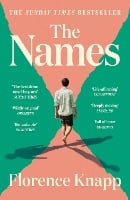
Have you ever looked back at a single choice in your past and wondered how everything might have unfolded if you had taken another path? Florence Knapp’s debut novel, The Names, takes that universal curiosity and builds a deeply layered, emotionally resonant story around it. Opening in the wake of the Great Storm of 1987, the book explores the quiet power of names and the heavy decisions mothers make when trying to protect their children. It is an ambitious structure for a first-time novelist, yet Knapp handles the multi-layered narrative with remarkable poise and care.The story opens with Cora, a young mother walking to the registrar’s office in England alongside her nine-year-old daughter, Maia, and her newborn infant. Cora’s husband, Gordon—a controlling, oppressive man—fully expects her to register the baby under his own name, continuing an unforgiving family tradition. But standing before the clerk, pen poised above the register, Cora hesitates. That split-second pause splits the narrative into three distinct realities that unfold across thirty-five years, visiting the family in seven-year leaps.
In the first timeline, Cora picks the name Bear, a gentle suggestion offered by young Maia. In the second, she chooses Julian, hoping a fresh name will allow her son to become his own person away from his father's dark influence. In the third, she yields to fear and names him Gordon, watching him grow up under the heavy expectation of becoming his father's legacy. Although every path starts at the exact same desk, the ripple effects alter not only the boy’s personality and future, but the safety, happiness, and dynamics of the entire household.
Structuring a book across three parallel timelines is a tricky balancing act, yet Knapp handles the logistics with impressive clarity. The seven-year jumps give the story a steady, rhythmic cadence. Rather than drowning the reader in endless exposition, each section acts like a focused snapshot of a specific age and era. Knapp’s writing is clean, evocative, and refreshingly unpretentious. She has an eye for small domestic details—the weight of a teacup, the shift in atmospheric pressure before an argument, the specific texture of an autumn morning—that ground the high-concept framework in plain, recognisable reality.
At its heart, The Names is less about magic or coincidence and more about the impact of environment, coercive control, and human resilience. Cora’s struggle with domestic abuse feels painfully authentic and carefully researched. Knapp does not shy away from showing the grim reality of emotional violence, yet the novel never feels irredeemably dark. The warm bond between Maia and her brother—regardless of what name he carries—serves as the emotional heart of the book. It poses intriguing questions: how much of who we become is tied to what we are called, and how much is shaped by the people who love us? Watching minor characters crossover into different roles across the three strands adds a satisfying sense of interconnectedness.
No novel is completely flawless, of course. Readers who prefer a standard, linear storyline might find the constant switching between three parallel realities a little demanding at first. Because the narrative jumps seven years with each section, certain dramatic developments happen off-stage, leaving you to piece together what occurred in the intervening gaps. Additionally, a few side characters feel slightly underdeveloped in specific timelines compared to others. However, these are minor quibbles in what is otherwise a finely balanced work.
Who will enjoy this book?
- Fans of multi-version narratives: If you enjoyed Life After Life by Kate Atkinson or the classic Sliding Doors concept, this book offers a fresh, grounded take on alternative destinies.
- Lovers of character-driven family dramas: Readers who appreciate quiet emotional depth, complex sibling bonds, and stories about maternal strength will find plenty to appreciate here.
- Book clubs: The central premise provides endless conversation starters about identity, choices, and the lasting impact of family dynamics.
The Names is a thoughtful, beautifully constructed debut that lingers in your mind long after you turn the final page. Florence Knapp has delivered a quiet triumph of a novel—one that balances tender family warmth against harsh personal truths with genuine skill. I thoroughly enjoyed watching these three lives unfold and would recommend picking up a copy if you enjoy stories that make you reflect on your own past decisions.
Rating: 4.5 out of 5 stars