
Home > Book Reviews > The Wax Child

Review
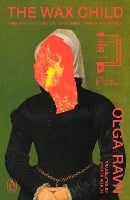
If you read Olga Ravn’s Booker-shortlisted novel The Employees, you will already know that she excels at creating claustrophobic, unsettling worlds driven by strange observers. In The Wax Child, translated with remarkable precision by Martin Aitken, Ravn turns her attention from futuristic spaceships to the damp, paranoia-heavy soil of seventeenth-century Denmark. At under two hundred pages, it is a brief book, but its eerie atmosphere lingers long after you finish reading.The story draws directly from historical court records surrounding the 1620 witch trials in Jutland, specifically focusing on a noblewoman named Christenze Kruckow. As rumours of dark craft begin to circulate around her village, Christenze melts down beeswax and molds a small human figure. She carries the figure under her arm, allowing her body warmth to shape it, imparting a quiet, surreal vitality to the object.
This doll—the Wax Child—serves as our primary narrator. Equipped with sealed eyes and ears that cannot open, it somehow sees and hears everything occurring around its creator. It observes Christenze’s quiet moments of affection with her friends by candlelight, listens to the bitter gossip whispered behind closed doors, and takes in the oppressive atmosphere of the surrounding pine forests and misty fjords. Crucially, the doll watches as local male authorities and anxious neighbours slowly construct a case of witchcraft against Christenze. As the net tightens, the wax child documents the terrifying speed at which suspicion turns into irreversible violence.
Ravn’s approach to historical fiction is refreshingly sensory and tactile. Rather than giving us a dry period piece, the writing is soaked in raw physical detail: tallow, sea fog, wet wool, and woodsmoke. Choosing an inanimate object as a storyteller could easily have felt like a gimmick, but it works surprisingly well here. The wax child speaks with a voice that is simultaneously detached and deeply intimate. It lacks human emotion, yet it observes the fragile tenderness shared between women living under strict societal expectations, alongside the cold brutality of the legal system arrayed against them.
The pacing is swift and focused. Because the narrative is so concise, there are no wasted scenes or unnecessary subplots. Tension builds organically out of small interactions, sharp glances, and petty grudges rather than staged dramatic twists. Ravn effectively demonstrates how hysteria operates within a small community: once the label of witch is attached to a woman, every natural event, illness, or casual remark is reinterpreted to fit the narrative of guilt.
If there is a drawback to the novel, it lies in its surreal, dreamlike stylistic choices. At points, the narrative strays into fragmented folklore and abstract poetic passages that may test readers who prefer a straightforward historical mystery. Some of the supporting village figures blend together in the middle section, acting more as background voices than distinct characters. Furthermore, the ending arrives quickly, leaving a few historical threads feeling slightly abrupt.
On a personal level, I found the book's physical textures completely absorbing. Ravn does not romanticise the period; the bleakness of early modern life is presented without filter. The most chilling element for me was the contrast between the quiet innocence of the wax doll and the viciousness of the human characters trying to protect their own standing. It serves as a stark reminder of how easily public anxiety can be weaponised against vulnerable individuals.
Who will enjoy this book?
- Enthusiasts of dark, atmospheric historical fiction who appreciate works with a gothic or folk-horror tilt.
- Readers interested in early modern European history, particularly the social dynamics of witch trials.
- Fans of experimental narrative voices and translated fiction that pushes structural boundaries.
- Anyone looking for a short, immersive read that can easily be finished in a couple of sittings.
Ultimately, The Wax Child is a striking, unsettling portrait of human paranoia and female resilience under fire. Ravn has taken historical archive material and remade it into a poetic, disturbing fable about power and scapegoating. I would give this book 4 out of 5 stars—a thoroughly recommended read for anyone wanting something sharp, strange, and beautifully written.